Thinking about my personal weight journey… it’s been long—and honestly, probably not that unusual for most women. It’s been part fat-shaming, part body dysmorphia, part endless diets… and always, all-consuming.
I struggled terribly in high school. I was always the “chunky teen” in a family of naturally thin people. I was never skinny, but I got good at hiding it—layers of sweaters in the cold Northeast helped.
My mom was the first to tell me when I was getting “too fat.” She made sure I knew my perfect weight was 128 lbs when I was about 16 years old. I cannot tell you how grateful I’ve been to have that declaration etched into my brain forever. <sarcasm>
She also reminded me—often—that she was 113 lbs on her wedding day, could button her coat at nine months pregnant, and never let herself go above 128 lbs.
It took 30 years for a great therapist to tell me: that was not normal.
Doesn’t everyone grow up hearing their mom’s wedding weight? No? Huh. Wild.
The summer before college in 1994, I lost weight by simply… not eating. A little eating disorder sprinkled in there. Very effective. I got down to 128 lbs. (Chef’s kiss—perfect, right?)
In college, my weight fluctuated constantly—130 to 150 lbs, up and down, over and over again.
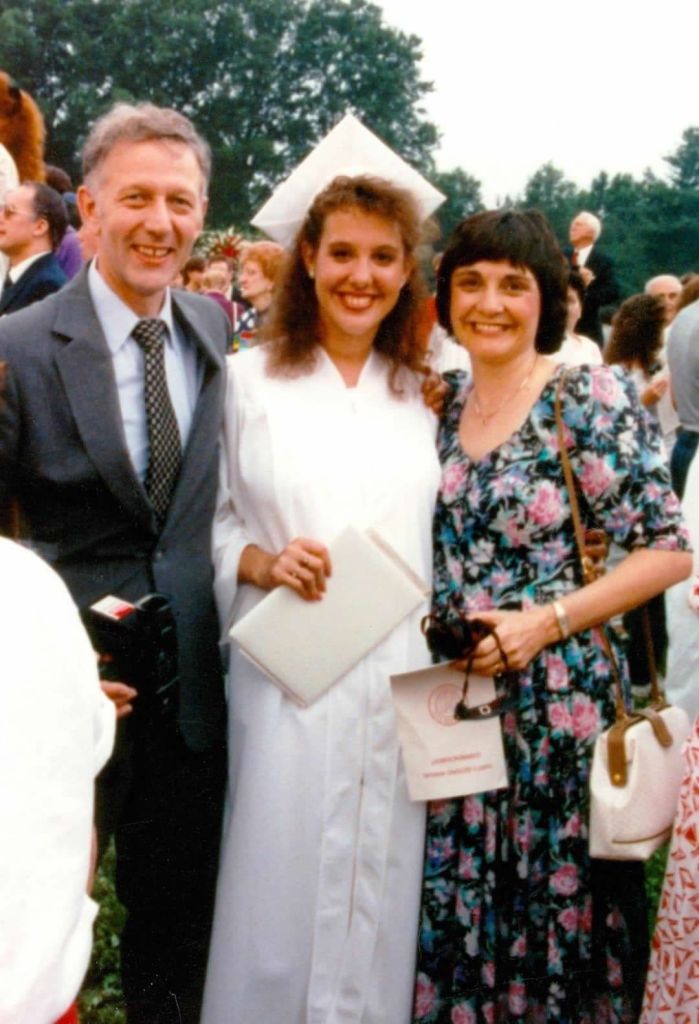
By senior year, between exercising, eating carrots, long nursing clinicals, and a couple of surgeries (tonsillectomy and appendectomy), I dropped weight again. By graduation and my wedding in 1994, I was around 125 lbs.
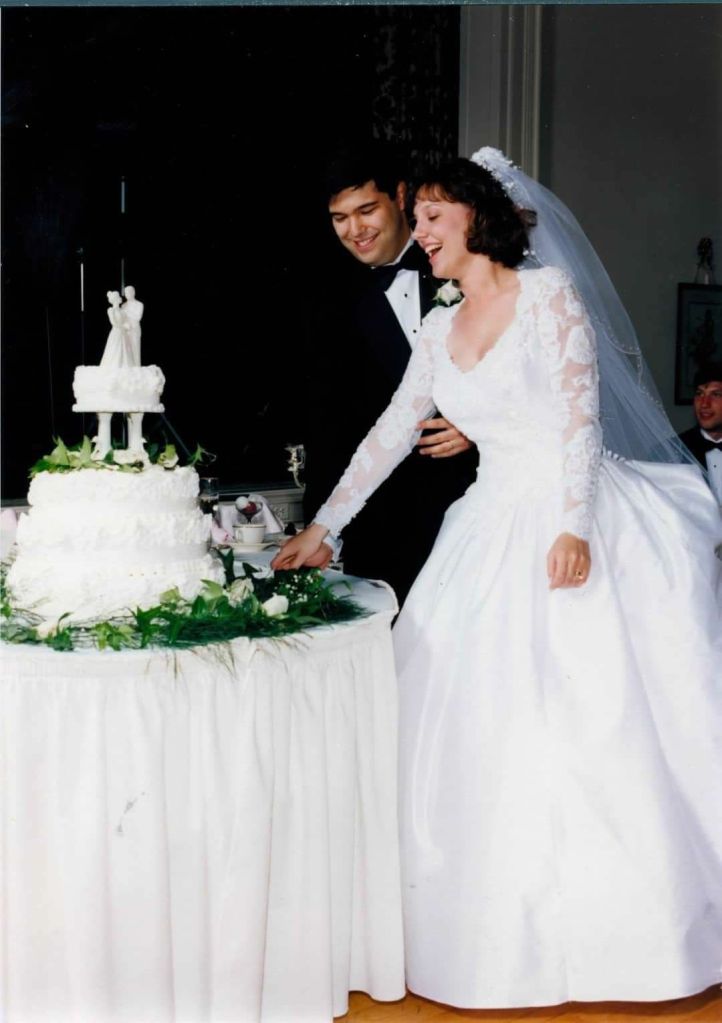
Then came real life. Nursing career, martial arts, focusing on nutrition, adulting… and then very planned pregnancy in 1997.
That pregnancy ended in a miscarriage at 11 weeks.
Along with the loss came about 20 extra pregnancy pounds and deep depression. I remember, with so much shame, needing my bridesmaid dress altered the night before my best friend’s wedding. Thankfully, her sister was a seamstress and saved me. I wore that dress all night—partied my heart out, but by the end, it was beyond saving – the stich fixes were pushed to their max. I remember throwing it ceremoniously in the trash.
Directly after, we moved across the country. I was about 155 lbs.
Then—joyfully—I got pregnant again. My first baby was born in 1998, exactly a year after my miscarriage.
But I could not lose the weight.
Despite exercising and eating well, I stayed heavier—from 1997 until my third baby was nine months old in 2002. Five years of feeling uncomfortable in my body, around 160–200 lbs.
In 2002, I found success with Weight Watchers and maintained a lower weight for about four years—around 123–125 lbs.
Notably… below my mom’s “ideal.”
At one point, she even commented that I was “getting too skinny.” That moment? It felt like triumph. Validation. A hit of dopamine I didn’t even question.
Looking back, it says a lot.
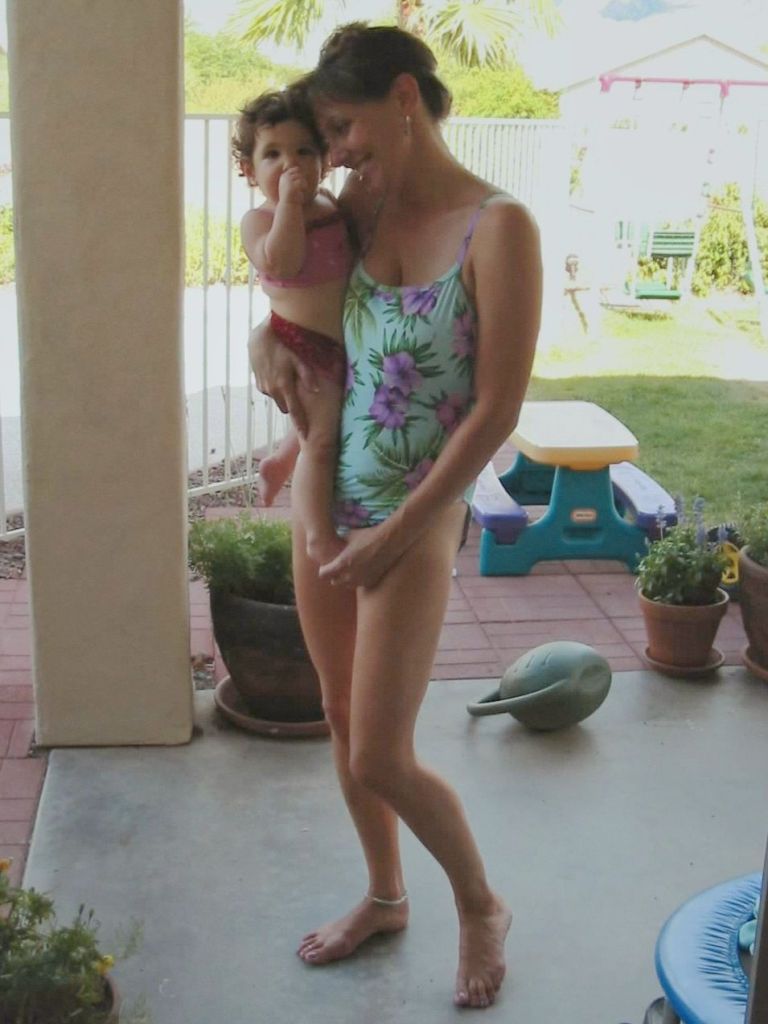
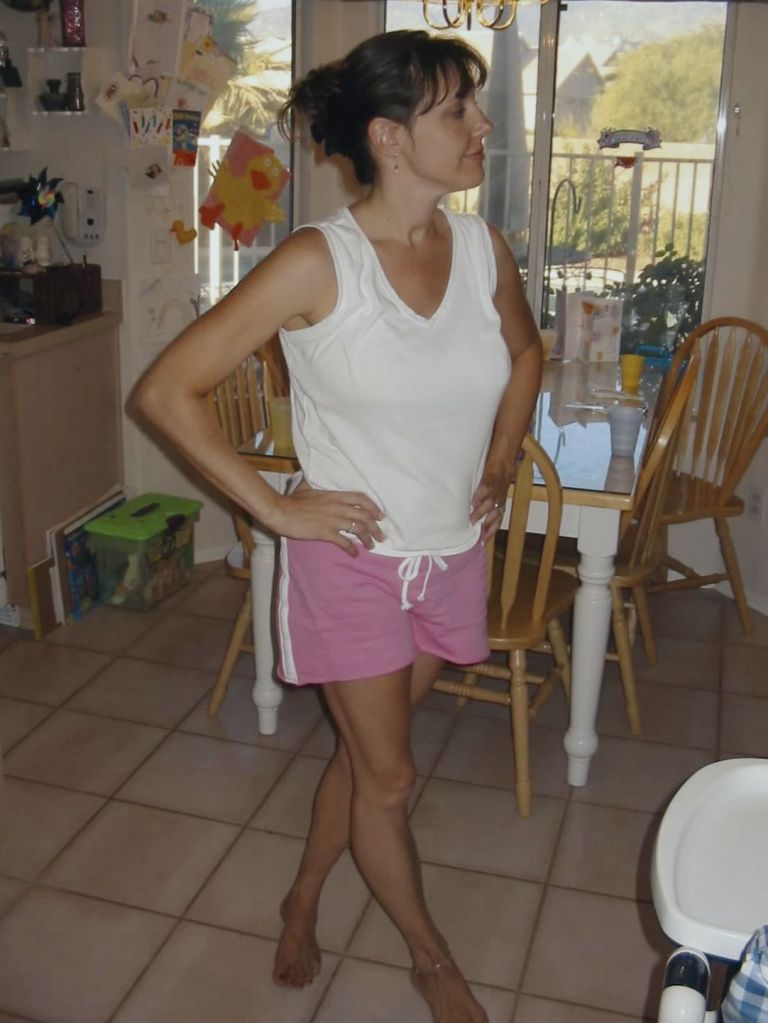
Then my health declined.
Four young kids, a career, a home—I believed I should be able to do it all. A message I’d internalized for years from the Feminism mantra that indoctrinated my brain throughout college in the 1990’s. During one of my lower weight times, I even gifted myself a well-deserved Mother’s Day gift for all time: a tummy tuck and breast reduction/lift. It was awesome. But my life was in chaos.
Because chronic migraine took hold. Depression, anxiety, and chronic fatigue followed. I needed real medical and therapeutic support, and exercise was no longer something my body could sustain.
From there, it was years of gaining and losing the same 20 pounds. Diets, life changes—just cycling.
We moved again in 2013, a family of 6. I was large and went on Nutrasystem. I got smaller and reached my goal weight of 140 lbs and was gifted a Success teddy bear from Nutrasystem! Another five years going up and down.
By 2020, after COVID lockdowns, I had obtained two more chronic illnesses – Rheumatoid Arthritis and Sacroiliac Joint Dysfunction and I reached an incredible 198 lbs.
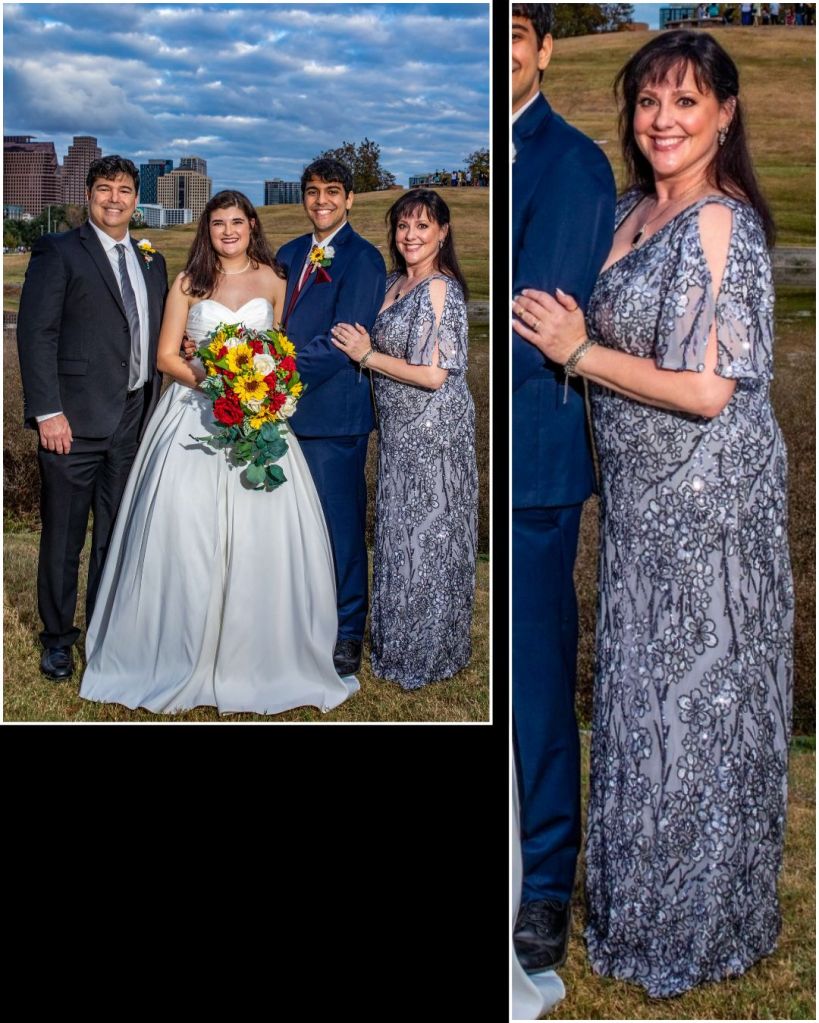
In 2022/2023, my doctor prescribed a GLP-1 medication after I pleaded for help.
Since then, I’ve since lost 50 pounds. My labs are healthy again!
And now? I sit at what I call my real normal—around 145–150 lbs. Can you hear that, mom? It’s 145-150, NOT 128.
Not the tiniest version of me. Not 2002 me.
Just… me. And a pretty happy, still chaotic, midlife Me.
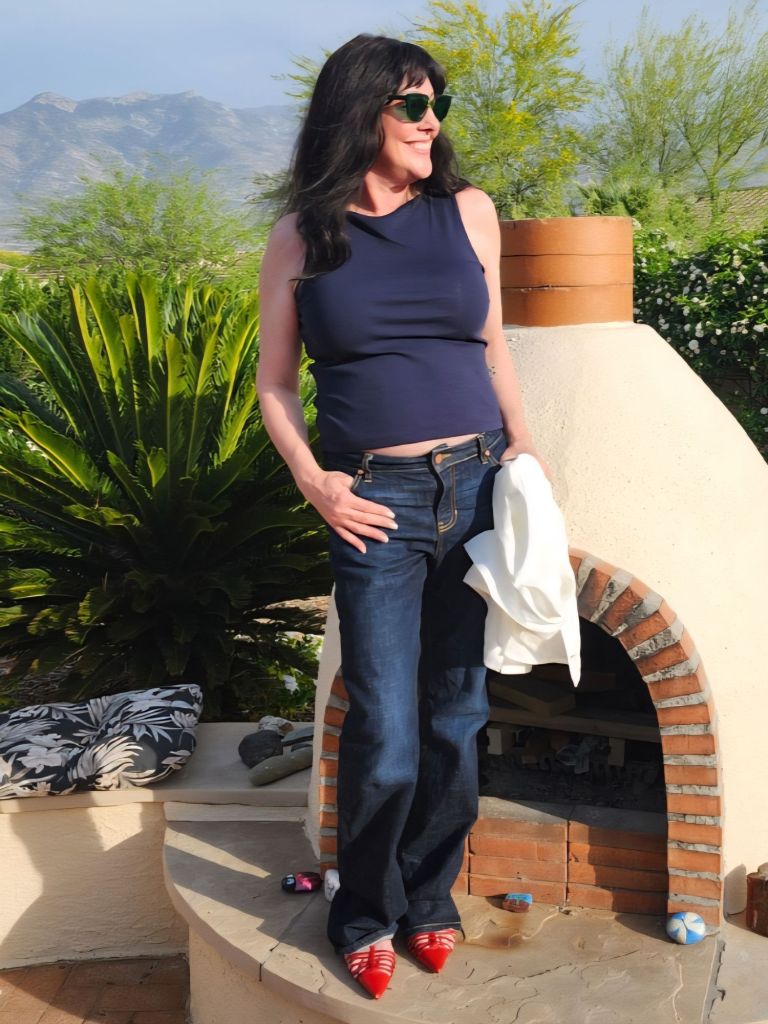
And here’s the truth: Even at my smallest, my body never looked the way I thought it “should.” My midsection never had that perfect “nip” other woman had… I looked all wrong in a bikini and spent years thinking something was wrong with me.
But the truth is: This body has lived. It has carried me through learning and practicing a meaningful career, incredible loss, through four pregnancies – creating and sustaining life, nursing and nurturing children, through illness, through healing, serving others, and loving with all I have.
And I hate—truly hate—that weight is such a painful, consuming experience for so many women. It’s exhausting. It’s boring. And it’s filled with so much unnecessary shame.
We carry this impossible expectation to do it all and look perfect doing it.
But look at what our bodies actually do: They move. They work. They create life. They nurture. They love. They endure.
We have to learn—somehow—to love ourselves regardless of what the number on the scale says.
One of the most powerful things I ever heard in Weight Watchers was: “You can’t hate yourself into a body you love.”
That has stayed with me.
Because I’ve tried. Over and over again.
And now I try to speak to myself differently: Speak to yourself the way you would speak to someone you love.
More than anything, I’ve wanted to break this cycle for my children.
No scales in the house. No shame around food. Lots of conversations about nourishment, not punishment. Room for both healthy choices and Joy with occasional celebratory sweets and treats that make life FUN!
I don’t know if I succeeded.
At least two of them struggle with weight—and that breaks my heart in ways I can’t fully explain.
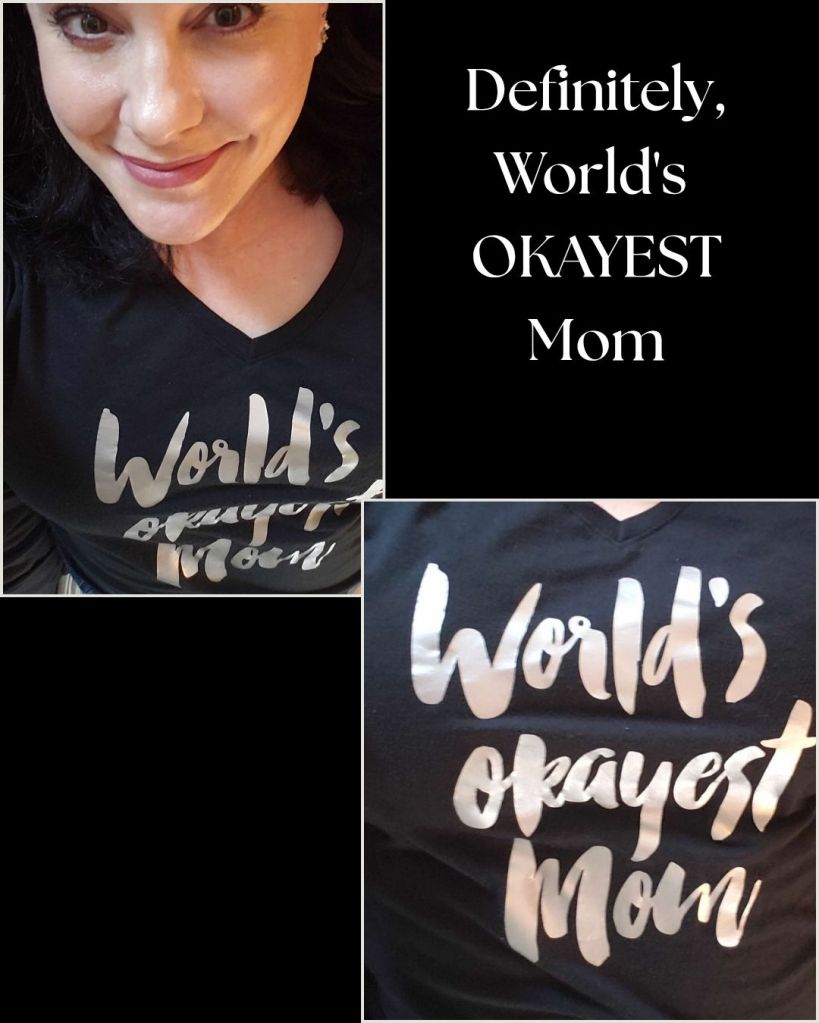
But I will never stop showing up for them. Never stop reminding them they are worthy.
Of love. Of health. Of peace.
God, please help me be a better mother. Help me protect them. Help them know—deeply—that they are worthy of love.
Especially their own.
#ChronicMigraine
#MigraineWarrior
#ChronicIllness
#InvisibleIllness
#BodyImage
#BodyAcceptance
#SelfLoveJourney
#WomenSupportingWomen
#BreakTheCycle
#MyStory
#RealTalk
#HealingJourney
#EndTheStigma
#ChronicIllnessWarrior
#ProgressNotPerfection
One story I would add is about my brother-in-law’s first wife, and mother of my niece and nephew. She struggled with weight her whole life. I watched her try out anorexia, diets, everything. She couldn’t make the scale move and she was absolutely unhappy. Then she had gastric surgery and lost all the weight. She finally had achieved her goal! And there’s where the problem was… she had spent her whole life imagining HAPPINESS was a number on the scale… when she finally got there, she found no happiness. Tragically, she took her life. A tragedy beyond words. My niece and nephew forever without their mother. It reminds me so much of those critical WW words: You can’t hate yourself into a body you love.